

1. In mindfulness one is not only restful and happy, but alert and awake. Meditation is not evasion; it is a serene encounter with reality.
— Thich Nhat Hanh
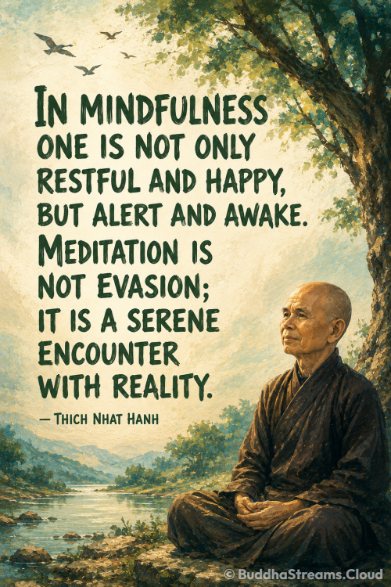
Many people believe that meditation is a way to run away from the world or hide from their daily struggles. But true mindfulness does not mean closing your eyes to reality; it means opening your heart to it with complete clarity. You are not trying to fall into a dreamy sleep. Instead, you are waking up to this very moment, meeting your life face-to-face with a calm, brave, and gentle spirit.
2. The mind is like water. When it’s turbulent, it’s difficult to see. When it’s calm, everything becomes clear.
— Buddhist Proverb
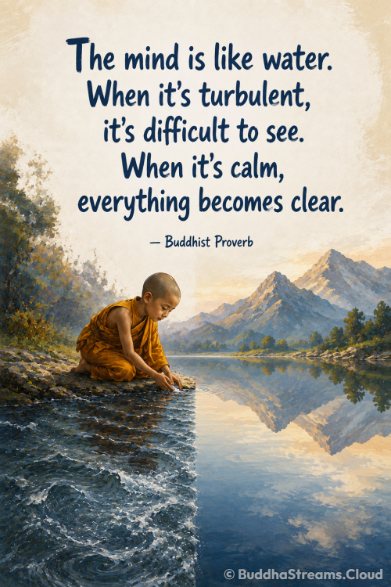
When mud is stirred from the bottom of a lake, the water becomes cloudy, making it impossible to see what rests beneath the surface. The mind often behaves in the same way when it is filled with constant activity and restless thoughts. There is no need to struggle against the murky water or force the mud to settle. With patience, calm breathing, and quiet stillness, the disturbance gradually fades on its own. As the mind finds rest, clarity gently returns, revealing what had been there all along.
3. Do not try to stop your thoughts. Let them come and go like waves; just don’t surf them.
— Zen Teaching

A common misunderstanding in meditation is the belief that the mind must become completely empty. This often leads to unnecessary frustration, because the mind is naturally meant to generate thoughts, just as the ocean is naturally meant to create waves. Thoughts are not signs of failure, nor are they something that must be fought against. They can be allowed to arise and pass away in their own time. With gentle awareness, a person can simply remain present, observing each thought as it comes and goes, much like someone standing peacefully on the shore, watching the waves roll in and out without being carried away by them.
4. Meditation brings wisdom; lack of meditation leaves ignorance. Know well what leads you forward and what holds you back.
— Buddha
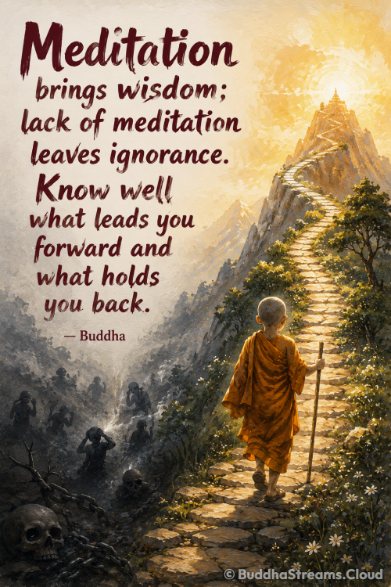
Moments of silence can serve as a clear mirror, gently reflecting the landscape of the inner life. Without this quiet space for reflection, many people move through their days repeating familiar patterns of pain and worry without fully understanding what lies beneath their unhappiness. Meditation offers a precious opportunity to pause and observe these patterns with kindness and clarity. In stillness, a deeper awareness begins to emerge, revealing which thoughts nourish peace, compassion, and growth, and which thoughts keep the heart entangled in fear and concern. Through this gentle understanding, the path toward greater inner freedom becomes easier to see.
5. You cannot travel the path until you have become the path itself.
— Buddha

Many people approach spiritual growth as though it were a distant destination to be reached or a set of rules to be followed without error. Yet true peace is not something waiting at the end of a journey. It lives within the present moment and reveals itself through each small act of awareness, patience, and self-compassion. The path unfolds through the gentle care shown to a weary mind, the kindness offered during moments of struggle, and the attention given to each breath. When peace is embraced in the here and now, it becomes clear that there is nowhere else to arrive. The journey and the destination have always been one and the same.
6. To understand everything is to forgive everything.
— Buddha
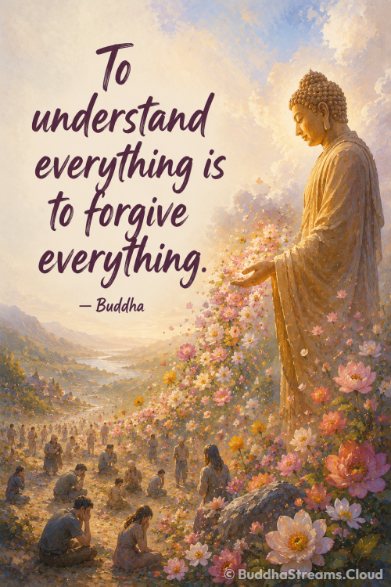
When the mind becomes filled with judgments, it often grows heavy and unsettled. Meditation encourages a gentler way of seeing, helping reveal the pain or fear that may lie beneath difficult actions. As understanding deepens, anger begins to soften, and compassion naturally takes its place. In this way, the heart is gradually freed from the weight of resentment and opened to greater peace.
7. Empty your mind, be formless, shapeless; like water.
— Bruce Lee
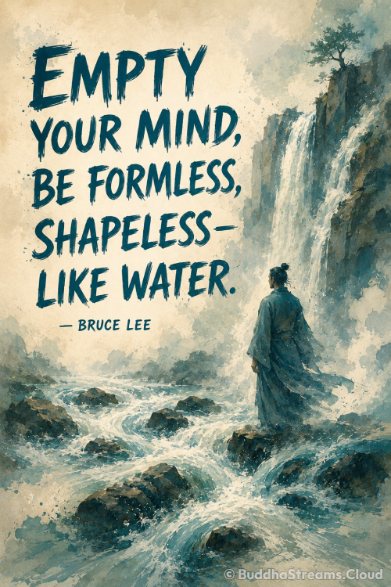
Suffering often grows when life is measured against rigid expectations of how things should unfold. When reality fails to match those expectations, disappointment naturally follows. Like water flowing into any vessel, wisdom lies in meeting life’s changes with gentleness and flexibility. By releasing the need to control every outcome, the heart becomes more resilient, finding a peaceful way forward even when obstacles appear.
8. The present moment is the only time over which we have dominion.
— Thich Nhat Hanh
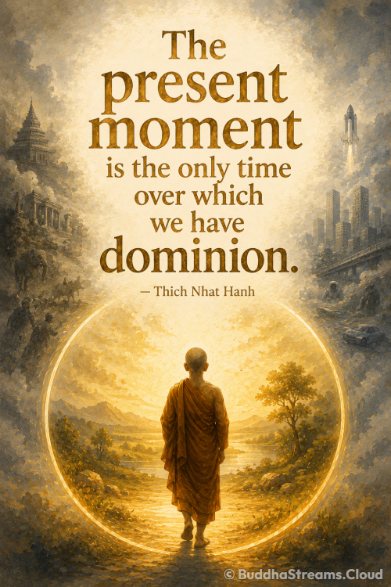
The past cannot be changed, and the future cannot be fully controlled. The only moment that truly belongs to anyone is the one unfolding right now. When attention becomes lost in yesterday’s regrets or tomorrow’s uncertainties, peace often slips away. By gently returning awareness to the present moment and the rhythm of the breath, the mind discovers a quiet strength and a deeper appreciation for the life that is here today.
9. Mindfulness is the aware, balanced acceptance of the present experience.
— Sylvia Boorstein
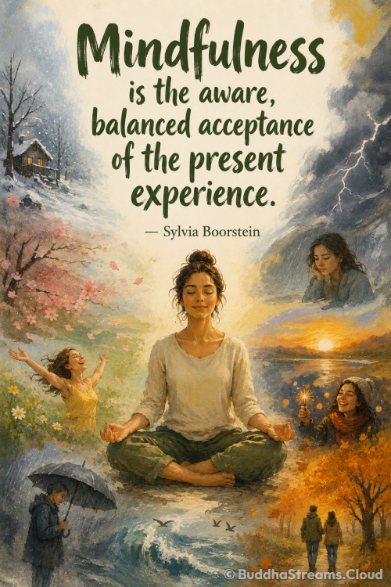
Meditation is not about achieving a perfect state of constant calm or happiness. Its deeper purpose is to cultivate a gentle awareness that welcomes each experience with kindness and understanding. Whether peace, sadness, restlessness, or joy arises, each feeling can be met without judgment or resistance. In this compassionate acceptance, the heart begins to soften, and true healing quietly unfolds.
10. When you realise there is nothing lacking, the whole world belongs to you.
— Lao Tzu

The world often encourages the belief that happiness can be found through having more, achieving more, or becoming someone different. Yet this constant striving can leave the heart feeling weary and unfulfilled. Through meditation, a quieter truth begins to emerge. Beneath the endless pursuit lies a deep sense of wholeness that has always been present. In the simplicity of a single breath and a moment of stillness, it becomes clear that true richness is not something to be acquired, but something already resting within.
11. Better than a thousand hollow words is one word that brings peace.
— Buddha
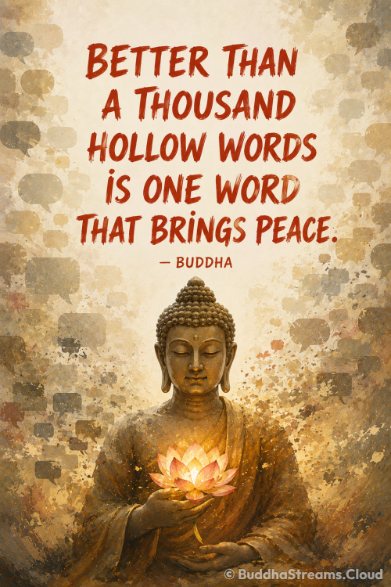
Many people search for peace through endless ideas, explanations, and discussions, yet a crowded mind rarely finds true rest. Wisdom is not always found in more words, but often in greater simplicity. During meditation, a single meaningful truth, gently held in awareness, can offer more comfort and guidance than countless debates. In stillness, simple qualities such as peace, trust, or compassion often reveal their quiet power.
12. To keep the body in good health is a duty, otherwise we shall not be able to keep our mind strong and clear.
— Buddha
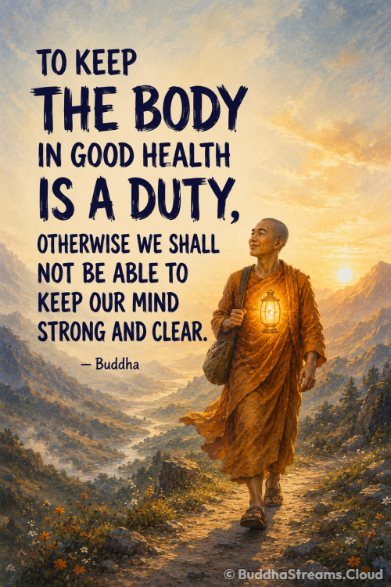
The well-being of the mind and the health of the body are deeply connected. When the body is exhausted, tense, or neglected, inner stillness can be more difficult to find. Caring for the body is not separate from spiritual growth. It is an act of kindness and respect toward oneself. Through proper rest, gentle care, and nourishment, the body becomes a steady foundation, allowing the mind to settle more easily into peace and balance.