13 Ancient Zen Sayings That Will Stop Your Overthinking Today
1. Let go or be dragged.
— Zen proverbs
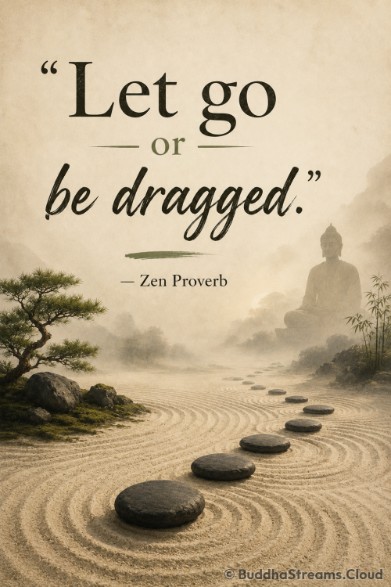
Few teachings are this simple or this honest. You can hold on and be dragged painfully through every change life brings. Or you can release. Not because letting go is easy, but because holding on often costs more than the thing you are holding is worth. The rope does not care how tightly you grip it. The river will keep moving regardless. What you get to choose is whether you go with it by choice or by force. Letting go is not giving up. It is choosing how you travel.
2. If you understand, things are just as they are. If you do not understand, things are just as they are.
— Zen proverbs
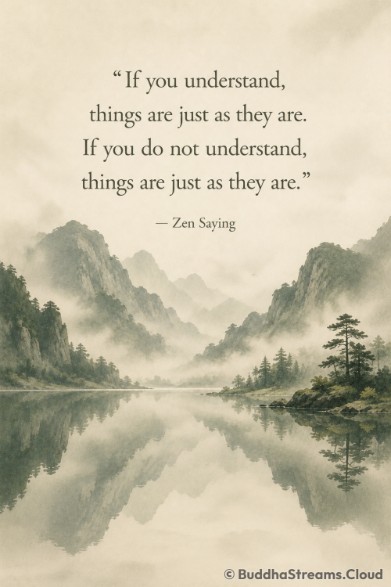
Reality is not waiting for your approval to be real. The mountain does not need to be understood to be a mountain. The river does not require your comprehension to flow. This proverb points to something quietly freeing. Your ideas about life do not change the nature of life. But they do change what you experience of it. Understanding does not alter what is. It alters how freely and fully you can be with what is. Which, it turns out, changes everything about your experience, if not about the world itself.
3. When you get there, there is no there there.
— Zen proverbs
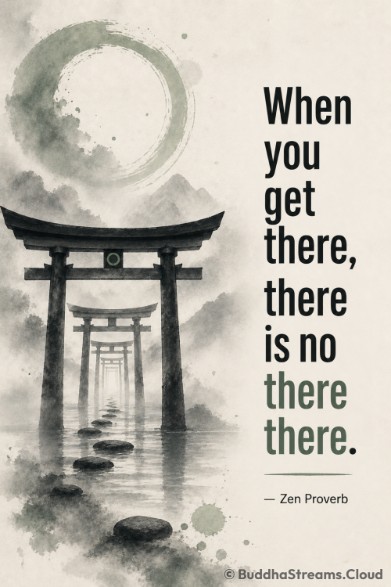
We spend enormous energy moving toward a there, a future state where things will finally be right. When the relationship is better. When the finances stabilize. When we feel healthier. When we have finally become the person we are working to become. Zen tradition gently and repeatedly points out that when you arrive at each there, it immediately becomes another here. And then there is another there in the distance. The arriving never stops. Which means the only sane response is to stop waiting to arrive and begin actually living here.
4. Knock on the sky and listen to the sound.
— Zen proverbs
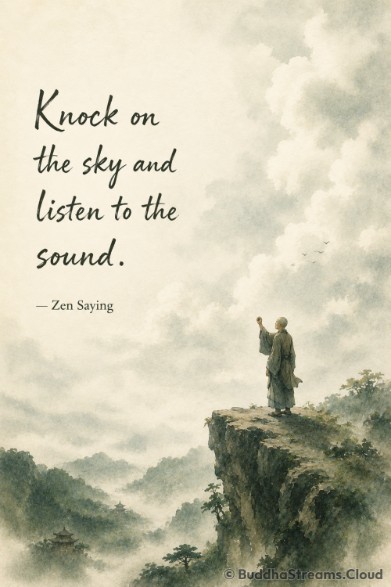
This is an invitation into the impossible. Knock on the sky. Try something that cannot be done and listen for what it teaches you. Zen has always had a love for the unanswerable question, the impossible instruction, the koan that breaks the thinking mind open from the inside. Not every question is meant to be answered. Some questions are meant to be lived. Some instructions are meant not to be followed but to be held, turned over, until something in you recognizes what they are pointing at.
5. Do not seek the truth. Only cease to cherish opinions.
— Zen proverbs
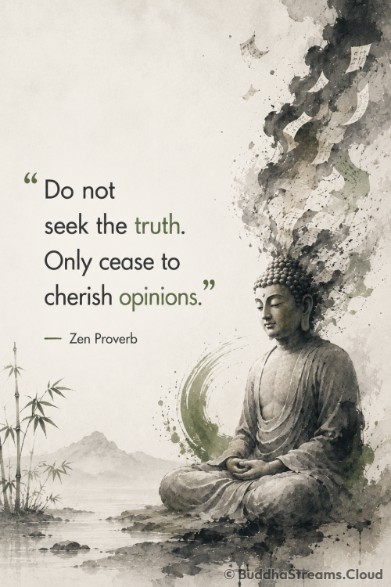
The search for truth often becomes another project of the ego, a more sophisticated way of being right. Zen cuts to the chase with characteristic directness. You do not need to find the truth. You need to stop gripping your current beliefs so tightly that truth cannot enter. Opinions are not wrong. But cherishing them, defending them, building your identity around them, this is what keeps you from seeing anything new. The open hand of a person without opinions to protect is the hand that can actually receive something real.
6. Walk while you walk, eat while you eat, sleep while you sleep.
— Zen proverbs
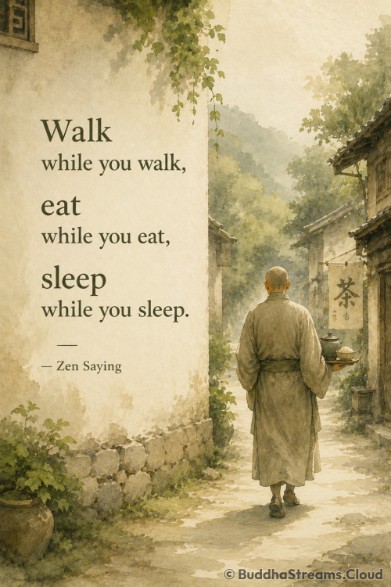
We have almost completely lost the ability to do one thing at a time. We eat while watching something. We walk while listening to something. We sleep with anxiety about tomorrow. Every moment is being used as a vehicle for something else, and so nothing is ever simply experienced. This ancient proverb is not nostalgic. It is urgent. When you walk, let walking be enough. Let the feet on the ground, the air on the skin, the rhythm of your own body moving through space, let that be the whole thing. Nothing added. Nothing missing.
7. A day without work is a day without food.
— Zen proverbs
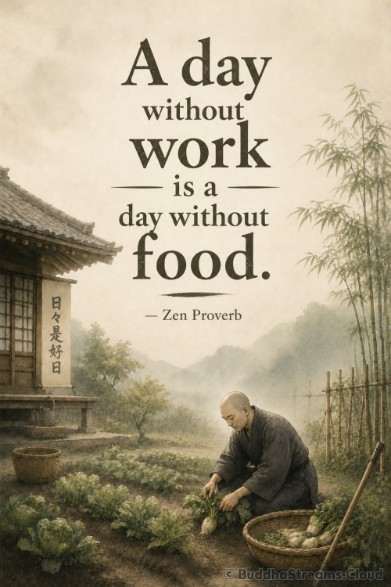
In Zen monasteries, work was not separate from spiritual practice. It was spiritual practice. Sweeping the courtyard, preparing the food, tending the garden, these were not things done between the real practice. They were the practice itself. This proverb carries that same understanding into daily life. The work of your hands, done with attention and care, nourishes something beyond just your body. The relationship between honest work and genuine wellbeing is not economic. It is spiritual. Useful activity is a form of aliveness.
8. Be master of mind rather than mastered by mind.
— Zen proverbs
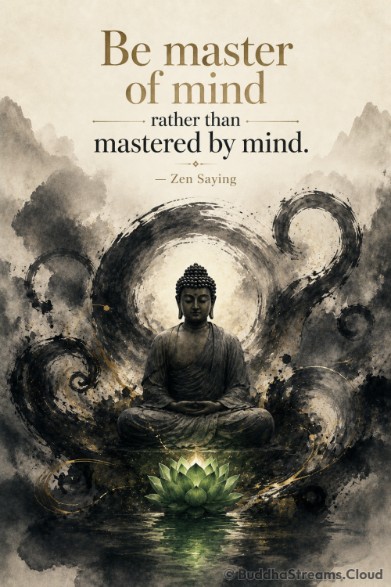
Most of us are not the ones steering. We are being steered by our thoughts, our fears, our moods, our stories, our conditioning. The mind generates a situation and we react to it as though it were real without pausing to question whether it is. Being master of mind is not about controlling every thought. It is about not being automatically controlled by any of them. One pause. One breath. One moment of noticing before reacting. That tiny space is where freedom lives.
9. Before enlightenment I was depressed. After enlightenment I’m still depressed, but now it’s okay.
— Zen proverbs
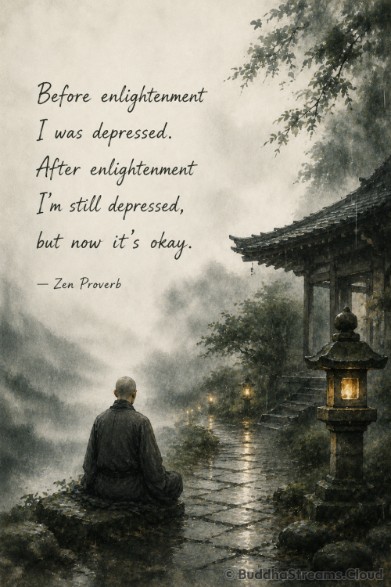
This proverb carries great humor and great compassion in equal measure. Spiritual awakening does not produce a permanently cheerful person who floats through life untouched by sadness or difficulty. What it changes is the relationship to those states. The weather of depression, anxiety, boredom, restlessness, it still comes and goes. But the person who has done genuine practice is no longer so shaken by its arrival. The storm comes. You know it will pass. You sit with it rather than fighting it. That shift, quiet and unglamorous, is enough.
10. Not knowing is most intimate.
— Zen proverbs
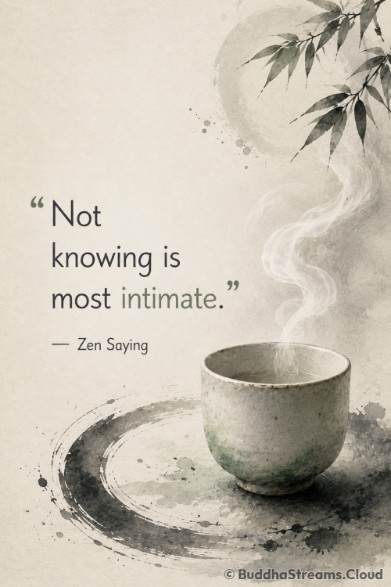
We use knowledge as armor. Certainty as a way of maintaining safe distance from the wildness and mystery of experience. Not knowing feels vulnerable. It feels like standing without a floor. But Zen wisdom suggests it is the opposite. The moments of genuine not-knowing, when we drop all our defenses and certainties and simply encounter what is here, those are the moments of closest contact with reality. Intimacy requires openness. And openness requires the courage to not already have all the answers.
11. Three things cannot long be hidden: the sun, the moon, and the truth.
— Zen proverbs
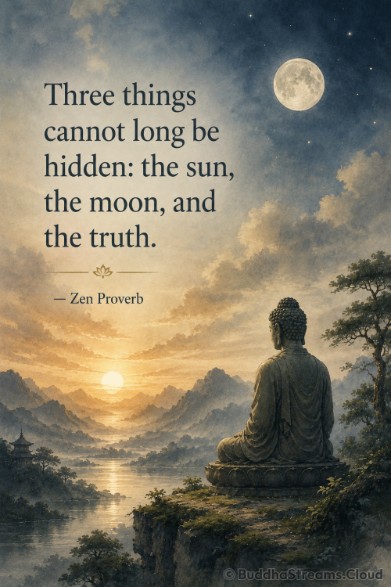
Truth has a way of surfacing. You can suppress it, delay it, dress it in more comfortable clothes, but it has a persistence that no amount of avoidance can permanently overcome. The sun will rise even if you close all the curtains. The moon will be there even behind the clouds. And the truth of who you are, what you genuinely need, what is actually happening in your life, will keep surfacing until you are willing to look at it clearly. Honesty is not always comfortable. But it is always, eventually, necessary.
12. Zen has no business being made complicated.
— Zen proverbs
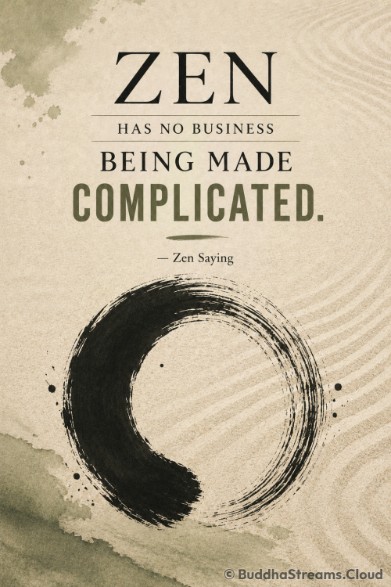
We complicate what is simple because complexity feels more serious. More earned. More worthy of our intelligence. But the deepest teachings of Zen have always been available to anyone. Sit still. Pay attention. Be kind. Let go. Return. Begin again. You do not need a philosophy degree to practice. You do not need the right cushion or the right lineage or the right vocabulary. You need a willingness to show up as you are and pay honest attention. That has always been enough. That is still enough.
13. The whole world is medicine. What are you looking for?
— Zen proverbs
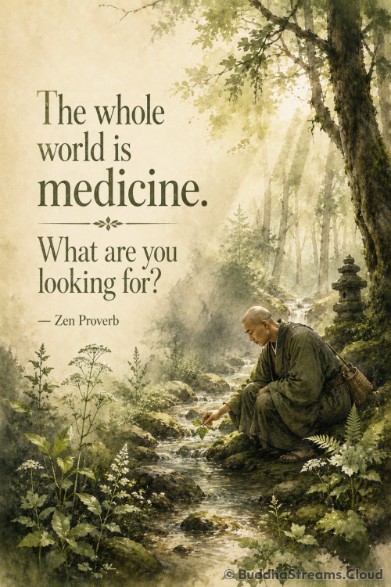
Everything around you has something to offer. The difficult coworker is medicine for patience. The empty afternoon is medicine for restlessness. The loss is medicine for attachment. The joy is medicine for the fear that nothing good will last. Zen is telling us that we are not living in a neutral environment waiting to be healed by the right external condition. We are already surrounded by exactly what we need. The medicine is present in every experience. The only question is whether we are willing to receive it.