
12 Ancient Zen Wisdom That Solves Your Biggest Modern Problem.
1. Before enlightenment, chop wood, carry water. After enlightenment, chop wood, carry water.
— Zen proverbs

This is perhaps the most famous of all Zen proverbs, and it is famous for very good reason. Enlightenment does not exempt you from the ordinary requirements of living. The laundry still needs washing. The work still needs doing. The meals still need preparing. What changes is not the activity. What changes is the person doing it. After awakening, the same tasks are done with completeness, with presence, with something that was not there before. The life looks the same from the outside. Inside, everything is different.
2. The obstacle is the path.
— Zen proverbs
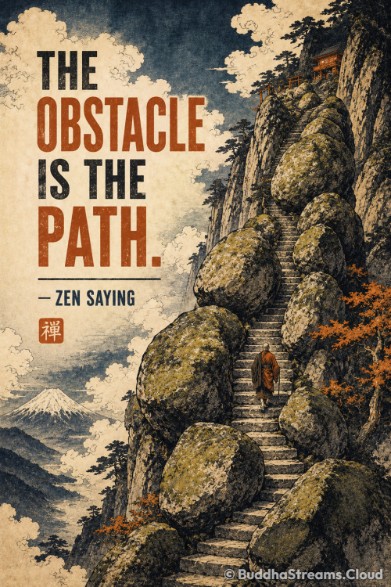
We spend so much of our lives trying to clear obstacles out of the way so that we can finally begin living properly. The Zen tradition gently but firmly turns this whole strategy around. The thing you are trying to get past is not keeping you from the path. It is the path. The difficult relationship is not an interruption of your growth. The illness, the failure, the confusion, none of them are detours. They are the route itself. Everything that has ever challenged you has been pointing at exactly where the work is.
3. When the student is ready, the teacher will appear.
— Zen proverbs

The teacher does not always appear as a person. Sometimes it is a book that finds you at the exact right moment. Sometimes it is a conversation with a stranger. Sometimes it is a failure that teaches you something no success ever could. The Zen tradition understands that readiness is the key, not external conditions. When you are genuinely open, when you have stopped being defended and certain and closed, the teaching arrives from everywhere. The world is full of teachers. The question is only whether you are ready to receive them.
4. If you are too busy to sit, sit twice as long.
— Zen proverbs
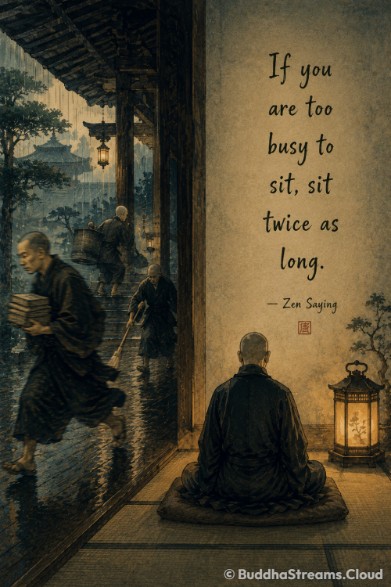
The days when you cannot find time to slow down are exactly the days when slowing down is most necessary. Busyness is not a reason to skip the practice. It is the condition that makes the practice most urgent. When the mind is full to overflowing, when the schedule is impossible, when everything feels urgent at once, that is not the moment to abandon your anchor. That is the moment to drop it deeper. The busier the water, the more important the stillness beneath it.
5. To follow the path, look to the master, follow the master, walk with the master, see through the master, become the master.
— Zen proverbs
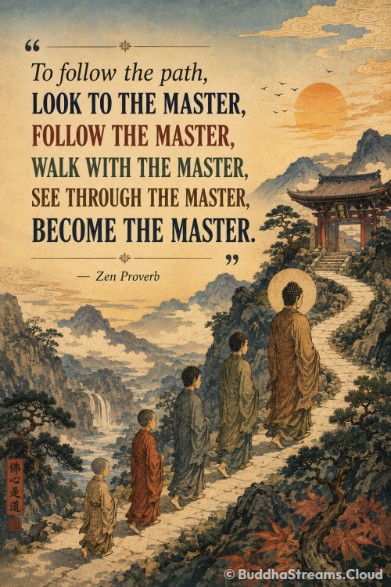
This progression is the entire arc of learning, not just spiritual learning, but any deep learning. We begin by looking toward those who have gone further. We follow their path. We walk beside them. Gradually, we begin to see through their eyes rather than just following their footsteps. And eventually, if we do not stop, we discover that what we were following was always pointing back to something alive inside us. Every genuine teacher has only one goal: to make themselves unnecessary.
6. No snowflake ever falls in the wrong place.
— Zen proverbs

This is a small sentence with enormous implications. Everything is exactly where it is supposed to be. Not as a rigid destiny that robs you of agency, but as an invitation to stop fighting what is already here. You are not in the wrong life. You are not in the wrong season. The circumstances you find yourself in right now, however they arrived, are the exact ones in which you can practice. The snowflake lands perfectly every time. So have you. So are you, right now, exactly here.
7. Sitting quietly, doing nothing, spring comes, and the grass grows by itself.
— Zen proverbs
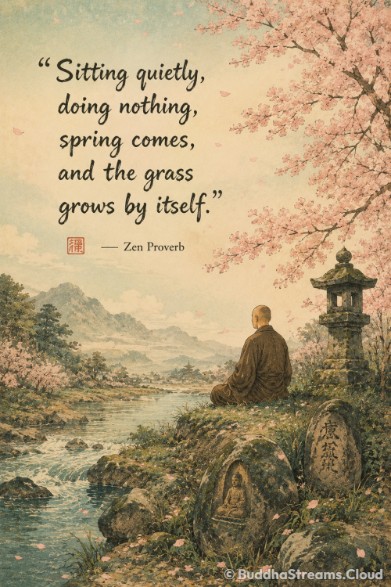
We are taught to believe that nothing good happens without force. Without pushing, striving, optimizing, making things occur through sheer effort and will. This ancient proverb offers a completely different understanding. Some things unfold naturally when given space. Some growth cannot be accelerated. Sitting quietly is not passivity. It is trust. It is the understanding that not every good thing requires your intervention. Sometimes the wisest and most powerful thing you can do is get out of the way and let spring come.
8. The finger pointing at the moon is not the moon.
— Zen proverbs
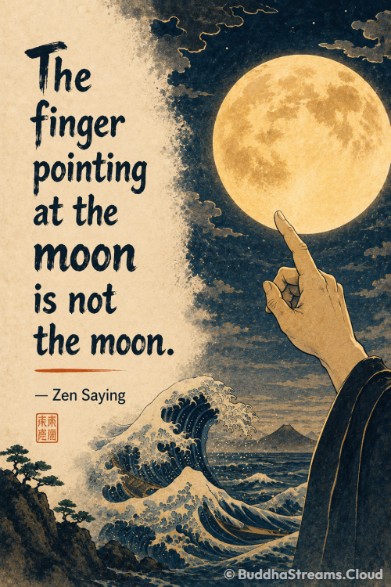
All teachings, all books, all words, including these, are fingers pointing. They are not the thing itself. The words about water are not water. The map is not the territory. This proverb is a warning that wisdom traditions have always known and always needed to repeat: do not mistake the vehicle for the destination. Read the teachings. Receive the wisdom. And then look up. The moon is real and luminous and cannot be contained in any word or concept. Let the finger point you there. Then look.
9. Think with your whole body.
— Zen proverbs

We live in an extraordinarily head-heavy culture. Everything is processed upward into cognition. What do I think about this? What is the rational response? What does the data say? Zen wisdom consistently asks us to drop below the neck. The body knows things. The chest tightens before the mind has a name for what is wrong. The stomach turns before the conscious mind has assessed the danger. Thinking with your whole body means learning to trust the intelligence that lives below your thoughts, in your bones and breath and instincts.
10. A single conversation across the table with a wise person is worth a month’s study of books.
— Zen proverbs

Books carry wisdom. But there is something a living, breathing, fully present human being can transmit that no page can replicate. The way a wise person pauses before answering. The quality of their attention when they are listening. The way they hold difficulty without flinching. These things pass from person to person not through words alone but through proximity and presence. Seek out people who are living what you want to learn. Sit across from them. Listen not only to what they say but to how they are.
11. Even if you fall on your face, you are still moving forward.
— Zen proverbs
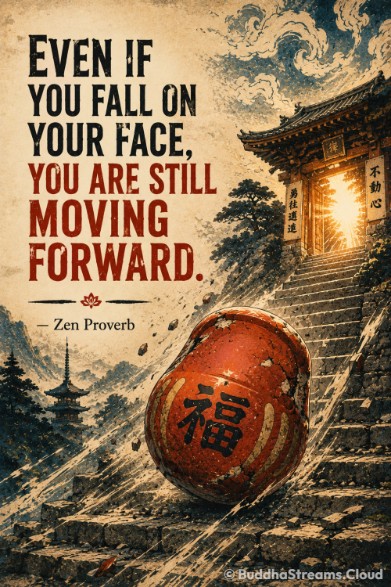
Failure is forward motion in disguise. Every fall teaches you something about the ground. Every mistake carries information about what matters and what does not work. The Zen tradition does not ask for a perfect walk. It asks for a walk that continues. The person who has stumbled many times and keeps going has learned something that the person who never tried cannot access. Your failures are not evidence against you. They are part of the path itself. Keep going. Even face down is a direction.
12. When you realize how perfect everything is, you will tilt your head back and laugh at the sky.
— Zen proverbs

This is not the laughter of someone who has decided that nothing is wrong. It is the laughter of someone who has seen through the surface of things to something underneath that is genuinely and inexplicably whole. The perfection Zen speaks of here is not the perfection of everything going according to plan. It is the perfection of things being exactly and completely what they are. When you see that, really see it, not as an idea but as a direct experience, laughter is the only reasonable response. It is the sound of the heart letting go.